Expanding Brooklyn
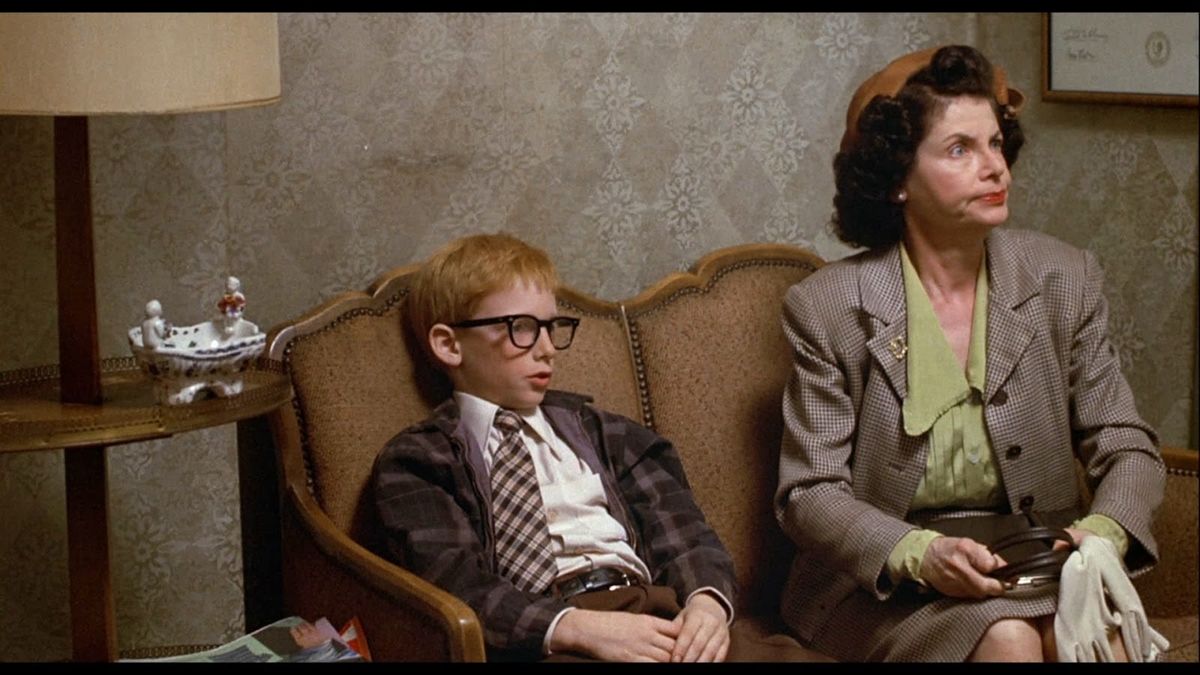
One of my favorite bits of dialogue in any film is in Annie Hall when young Alvy Singer is taken to the doctor because he's depressed. He tells the doctor that he's depressed because the universe is expanding, and the universe is everything, and eventually it will break up. The doctor reassures him that it won't happen for a long time, but before that reassurance comes his mother's iconic line: "What has the universe got to do with it! You're here in Brooklyn! Brooklyn is not expanding!"
I was thinking about this while listening to the If Books Could Kill podcast episode on Three Cups of Tea by the fabulist humanitarian Greg Mortenson. The episode was about Mortenson's books, and about Jon Krakauer's exposé of Mortenson in Krakauer's Three Cups of Deceipt, and it was all compelling, as the show always is. But what I was thinking about was Mortenson's obligation to build a school for the village he stumbled across. (I could have said something similar about Malala if I didn't want to include someone so objectionable, but my question about Malala is about what makes for a good life, and that's not what I want to think about here.)
Mortenson's story--it's a confabulation at best, but that's not the point here--is that he accidentally stumbled across a village when descending from trying to summit K2, and the village lacked a school and a dedicated teacher for its kids. Mortenson spent only a short time there but was moved by how little money it would take to pay for a dedicated teacher ($1 per day) that he promised someone there that he would return to build a school.
Forget that what they needed was a teacher, not a school, and that handing over a salary doesn't guarantee that they'll get one (and that his charity mostly funded himself and that the schools it did build were incredibly inefficient...): what I was thinking about was, in the story as told, did Mortenson stumble across an obligation that he wouldn't otherwise have had?
What I had in mind was something like this: I don't know what's absolutely best for me to do. I don't even know how I would figure it out. It's possible that, all else equal, there is some optimal thing for me to be doing right now. I know that optimal thing isn't for me to be sitting at home thinking about what I ought to do, so I'm already certain I'm not doing what's best.
But even if we think ahead to some future time, concede that I'm not doing what's best now but I could at least use my time now to figure out what would be best to do then, it seems literally impossible for me to know what I ought to do at any future time. The earth, let alone the universe, is too big and too complicated, and, anyway, timelines for evaluating actions are potentially infinite, so what if the best thing I could do right now is something that has nothing to do with humanity at all but is something that will set up some future interaction with non-humans who visit earth after humans are gone? What if it's something that looks horrendous now but will lead to something amazing later?
The end result of this kind of thinking is most likely either to give up on looking for "best" at all--some kind of nihilism, or an extreme humility that looks the same in practice--or, what I would prefer, to think that our idea of "best" loses some coherence as we move further from our everyday experience.
The analogy I have in mind is with arguments against skepticism. Brain-in-a-vat arguments or evil-demon arguments or even dreaming arguments all work by saying that our ideas of what's real can't distinguish consistently between what's really real and what only seems real but might be a dream/simulation/hallucination, etc. And that's plausible in the small scale (am I currently hallucinating or dreaming? maybe), but something goes wrong as it scales to the claim that nothing is or has ever been really real (have I always been hallucinating or dreaming?).
The skeptical conclusion is that, at a minimum, we can't know that anything is really real. G.E. Moore's response was famously (philosophy-famous, not famous-famous) to argue from his knowledge that "here is a hand" and "here is another hand," as he held up his hands, to "there are objects in the external world." More generally, the common-sense response is that, if literally nothing I can ever experience is really real, then let's just ditch the word "really" and do everything else exactly the way we were before the skeptical arguments. Dreams aren't real but tables are, which is we can still know, even though we aren't sure if anything is really real.
Similar analogy: if most of the space in an atom is unoccupied, then a solid material is really not solid. But if nothing is really solid, that doesn't mean that we have to say that smoke is not solid and also tables are not solid. We can understand that most of solid objects are space and leave out the word "really": It's still true that tables are mostly empty space in some sense, but when I decide where to set my mostly empty phone, the mostly empty table will keep it away from the mostly empty ground better than some mostly empty smoke will.
Backing out of the analogies, then, what happens when the question of what action is "best" entails either that you couldn't possibly know or maybe that there is effectively no answer, maybe not even an answer that you could recognize? What if the answer to what is best for how the universe is going that you should travel for weeks to a remote location where you should push a small seed slightly into the dirt? How would you go about justifying that as "best"? I'm not sure people would accept that this was best even if they knew what the universe had in store for that seed. (You abandoned your family and job because of how a future tree is indirectly going to affect aliens who visit in a thousand years?)
But I also don't want to concede that we should only ever do the same activities that we've always done, that we shouldn't regularly ask what more or what else we ought to do. There are no doubt times to abandon one's family and job for something grand. Even without something grand, surely there could be better things to do with my time, with my money, etc., than what I'm doing now. But once we start asking what better I could do, how do I not end up asking what best I should do?
This is what I thought of Mortenson's situation, at least before the fraud. Should he have used all his resources to climb K2 when there were better things to do? Probably not, but he hadn't thought of them, or hadn't taken them seriously. But then he stumbles across a village that needs a school and he's in a situation where he can provide the school, and that he takes seriously. Who knows why. Now what's best is clear, at least considered locally, not from the perspective of the universe: He should provide them a school. It's what we might think of as a "local optimum." Is it absolutely best? Almost certainly not. But if you reject the local optimum, it takes a while before we can find another local optimum situation, and it's a certainty that we'll never do better than some local optimum: the global optimum is beyond our ken.
That's why this reminded me of Alvy Singer's question, and of his mother's response. It's a joke in the scene, but she's right. (I'm not going to explain the joke since I want it to stay funny.) There is a tremendous amount of randomness that leads us to be in one place rather than another and to have one set of circumstances in front of us instead of another, but, given that we do, our obligations might follow entirely from what's locally optimum.
I don't think this is the right answer because I think this assumes that our obligations come in some way from what is best, and that connection is less straightforward. It's maybe the "locally right" answer: right for a short reflection on this podcast. But the better answer is that the local optimum idea is the right one even if our obligations don't follow directly from whatever is locally optimum. The better answer is that, even then, the local circumstances will determine our obligations, though in a more roundabout way.